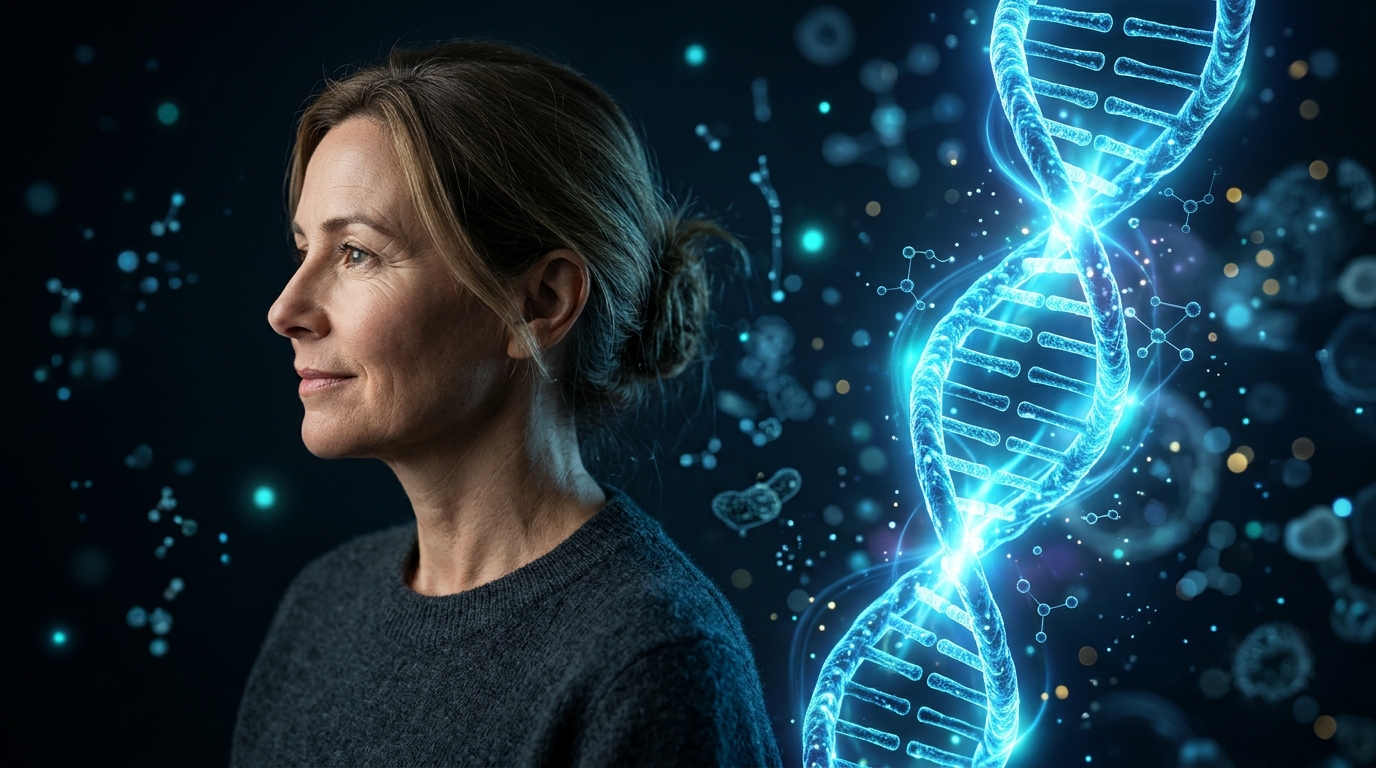
The Science of Living Longer
What Do We Really Know About Human Aging?
From cellular mechanisms to lifestyle factors, we explore what science has revealed about why we age and what influences how long and how well we live.
For millennia, human longevity was considered an immutable fate governed purely by chronology and chance. Today, cellular biology, systems medicine, and clinical genetics are converging on a revolutionary realization: aging is a malleable biological process with identifiable hallmarks that can be measured, targeted, and modulated.
The Cellular Architecture of Aging
At the heart of modern geroscience lies the concept of the 'Hallmarks of Aging'—a consolidated framework categorizing the primary drivers of physiological deterioration. These drivers include genomic instability, telomere attrition, epigenetic alterations, loss of proteostasis, deregulated nutrient-sensing, mitochondrial dysfunction, cellular senescence, stem cell exhaustion, and altered intercellular communication.
Each of these interconnected processes does not operate in a vacuum. A break in DNA repair pathways triggers cellular senescence, which in turn radiates chronic sterile inflammation (the Senescence-Associated Secretory Phenotype, or SASP) into neighboring healthy tissue. Understanding this cascading network is crucial for shifting from symptom management to root-cause longevity interventions.
“Aging is no longer viewed merely as the accumulation of random wear and tear, but as a coordinated biological program susceptible to targeted scientific intervention.”
- Genomic and epigenetic integrity decline with chronological years but can be preserved through metabolic signaling.
- Cellular senescence drives systemic inflammation, known clinically as 'inflammaging.'
- Mitochondrial resilience dictates bioenergetic efficiency and cellular survival across all vital organ systems.
Lifespan vs. Healthspan: Redefining the Objective
A critical distinction must be drawn between lifespan—the total chronological number of years an individual survives—and healthspan—the duration of life spent free from debilitating chronic disease, frailty, and cognitive decline.
Throughout the 20th century, modern public health, antibiotics, and surgical advancements successfully added nearly three decades to global life expectancy. However, this demographic triumph was accompanied by an unintended consequence: an expanded morbidity gap, wherein individuals spend their final 15 to 20 years managing multiple chronic metabolic, cardiovascular, or neurodegenerative conditions.
The mission of evidence-based longevity science is not simply the pursuit of hyper-extended lifespans, but the compression of morbidity—ensuring that biological vitality matches chronological longevity until the very end of life.
Genetics vs. Epigenetics: What Actually Governs Longevity?
Epidemiological studies of centenarians frequently prompt the question: how much of human longevity is hardcoded into our DNA? Peer-reviewed twin cohort studies consistently reveal that genetics accounts for only approximately 20% to 25% of lifespan variation prior to age 80.
The remaining 75% to 80% is driven by epigenetic regulation, environmental exposures (the exposome), lifestyle factors, and metabolic health. Unlike our fixed genetic code, our epigenome—the biochemical switches and DNA methylation patterns that determine gene expression—is dynamically responsive to our sleep architecture, nutritional quality, physical exertion, stress mitigation, and environmental toxic load.
The Evidence Horizon: Clinical Reality vs. Hype
As public enthusiasm for longevity surges, distinguishing peer-reviewed human clinical evidence from speculative preclinical findings is paramount. While molecular compounds like rapamycin, metformin, NAD+ precursors, and senolytics show profound lifespan extension in rodent models, rigorous human randomized controlled trials (RCTs) are only now maturing.
At The Longevity Gazette, our commitment is simple: beyond hype, beyond prejudice, and rigorously guided by evidence. We scrutinize the data, celebrate genuine clinical breakthroughs, and critically address pseudoscientific shortcuts.
This article is for educational purposes only and is not medical advice. Consult a licensed healthcare physician before starting any clinical protocol.